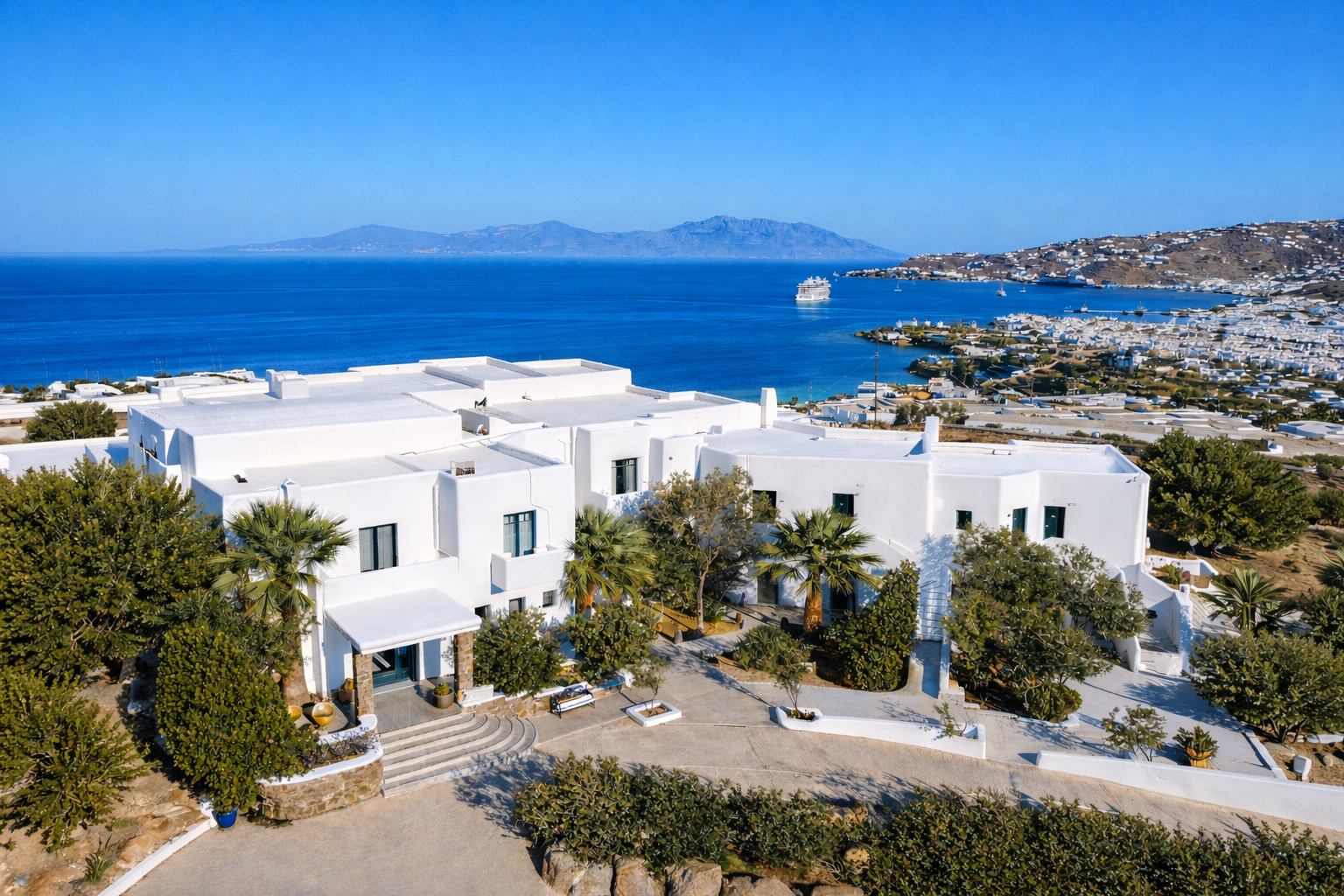
The hill on which Tharroe of Mykonos stands is not only a vantage point, but a site of historical and archaeological significance.
During construction works in 1994, a Mycenaean tholos tomb was uncovered at the summit of the hill, known locally as Angelika. The discovery led to a rescue excavation conducted by the Greek Archaeological Service.
The tomb dates to approximately the 15th century BC and belongs to the Mycenaean period (circa 1600–1400 BC). It originally featured a vaulted structure and a dromos — entrance passage — typical of Royal Mycenaean tholos tombs. Although the vault has collapsed, the circular structure of the tomb remains preserved on site under protective coverings.
Archaeological finds from the excavation include gold necklaces, amphorae, kylikes, and other pottery vessels. These objects are now housed in the Archaeological Museum of Mykonos, offering tangible evidence of Mycenaean presence in the Cyclades and the importance of the site during the Bronze Age.
Local historical accounts describe the tomb as having been built by a very powerful Mycenaean ruler for a woman believed to have been of high status, often referred to as a Queen.
The name "Tharroe" derives from the Greek verb θαρρώ, meaning "I believe" or "I presume", combined with the feminine article "η" — referring to the queen that is believed to have lived here. The name was chosen as a tribute to the history of the hill and to the enduring presence of memory, belief, and continuity tied to the place.
Today, the ancient monument remains visible within the hotel grounds, carefully preserved and acknowledged as part of the site's identity. It stands as a quiet reminder that Tharroe of Mykonos is built on layers of history spanning more than three millennia.